

Drinking a glass of ice-cold water should not take courage. Yet it is one of the most frequent complaints we hear at the Especialidades Dentales office in Monterrey: a sharp, electric jolt when you drink something cold, bite into a popsicle, or even when cold air rushes in as you breathe through your mouth in the middle of winter. If it has happened to you, you know it is not a strong, constant pain — but it is annoying, and above all it leaves you wondering whether something is wrong.
The good news: in most cases, tooth sensitivity has a clear explanation and real treatment options. The not-so-good news: it rarely goes away on its own, and ignoring it lets the underlying cause keep progressing. In this guide I explain why it happens, what triggers it, what you can do at home, and when it is truly worth booking a checkup.
Why do teeth hurt with cold?
A tooth is not a solid block. Its outer layer is enamel, the hardest substance in the body, and beneath it sits the dentin, a tissue crossed by thousands of very fine microtubules that point toward the center of the tooth, where the nerve is. As long as the dentin is protected — by enamel on the crown and by gums on the root — nothing happens. The problem starts when that protection is lost and the dentin becomes exposed.
When dentin is exposed, changes in temperature, sweets, or air make the fluid inside those tubules move. That movement stimulates the nerve endings, and the brain interprets it as the sharp, brief jolt you know so well. That is why the pain of sensitive teeth is so distinctive: it arrives suddenly, it is short, and it goes away once the stimulus disappears.
Another useful clue: if the pain fades within seconds, it almost always points to exposed dentin. If the pain lingers for minutes after the stimulus, or shows up with no stimulus at all, the story is different and a prompt checkup is in order — that is something we confirm in the office, because it cannot be diagnosed from a distance.
The most common causes of tooth sensitivity
In the office we see the same culprits over and over. Almost all of them have one thing in common: they leave the dentin without its protective layer.
- Gum recession. When the gumline drops, the root — which has no enamel, only a thin layer called cementum — becomes exposed. This is the most common cause in adults.
- Aggressive brushing. A hard brush or too much force wears away the cementum on the root and gradually pushes the gum back. People brush "determined to get them really clean" and end up thinning out their own protection.
- Bruxism. Nighttime grinding or clenching wears down enamel and can crack teeth. If you wake up with a tired jaw, this one applies to you — we cover it in depth here: bruxism and teeth grinding.
- Acid erosion. Soft drinks, lemon water, citrus juices, and reflux wear away enamel over time. Between us: the combination of carne asada with spicy salsas and citrus, plus a daily soda, comes up often here in Monterrey.
- Cavities or worn restorations. A cavity near the gumline or an old filling that no longer fits also causes sensitivity — but of a different kind: it usually hurts more when chewing or with sweets.
- After certain treatments. A deep cleaning, teeth whitening, or recent dental work can leave temporary sensitivity. It generally fades within days or a few weeks, and it is worth reporting if it does not.
Quick tip: Try this at home: gently run your fingernail along the line where the tooth meets the gum. If you feel a step or a rough edge on any tooth, there may be wear or an early cavity in that area. It does not replace an exam, but it gives you a good hint about where to look first.
What you can do at home
Sensitivity from exposed dentin does respond to habits, especially when the cause is mild or moderate. This is what we recommend first, before thinking about treatments:
- Switch to a desensitizing toothpaste. Formulas with potassium salts work by calming the nerve's response inside the tubules. Use it twice a day, every day, without alternating it with another toothpaste. The scientific evidence on how well they work is limited, but they are low cost and low risk, which makes them a reasonable first step. Give it 2 to 4 weeks of consistent use.
- Brush with a soft brush and the right technique. Angle the brush 45 degrees toward the gumline and use short, sweeping strokes. Scrubbing hard in a straight line does not clean any better: it wears your teeth down.
- Floss daily. Gum inflammation starts between the teeth, and an inflamed gum eventually recedes.
- Do not brush right after something acidic. Acid softens enamel for a few minutes. Rinse with water, wait about 30 minutes, and then brush.
- Check your breathing and your environment. Mouth breathing dries out your teeth and sharpens that jolt from cold air; if it happens at night, mention it at your appointment.
An honest word about desensitizing toothpastes: if after 3 or 4 weeks of consistent use you notice no improvement, the problem probably is not something you can fix at the drugstore shelf. It is time for a checkup.
In-office treatments
When the routine at home is not enough, we have several options in the office, and the choice depends on the cause we find:
- Fluoride varnish: applied in the office in minutes, it partially seals the tubules and strengthens enamel. It often brings noticeable relief in mild to moderate cases.
- Dentin adhesives and sealers: they coat the area of exposed dentin and block the stimulus from getting through.
- Resin restorations at the necks of the teeth: when aggressive brushing has worn the root surface, we rebuild that area and protect it.
- Night guard (occlusal splint): if the cause is bruxism, treating the symptoms without addressing the grinding is like bailing water out of a barrel without plugging the leak. The night guard protects your enamel while you sleep.
- Gum grafts: for advanced recession with heavily exposed roots, the periodontist covers the root with a graft. Not every case needs one, and not everyone is a candidate — it is evaluated in the office.
None of the above replaces a diagnosis: the same jolt from something cold can come from a hidden cavity, and the right treatment in that case is completely different. That is why the first step is always to see what is going on, not to apply random remedies.
When to worry and what to expect at a checkup
Tooth sensitivity triggered by cold that fades within seconds is rarely an emergency. But some signs change the priority. Book a checkup soon — within days, not months — if you notice:
- Pain that persists for several minutes after the stimulus, or that throbs when you have not eaten anything cold or sweet.
- Pain when chewing or when pressing on one specific tooth.
- Sensitivity concentrated in a single tooth, especially if that tooth has an old filling or crown.
- Gum or facial swelling, a bad taste in your mouth, or fever along with the pain.
- Teeth that look longer than before, or that feel slightly loose.
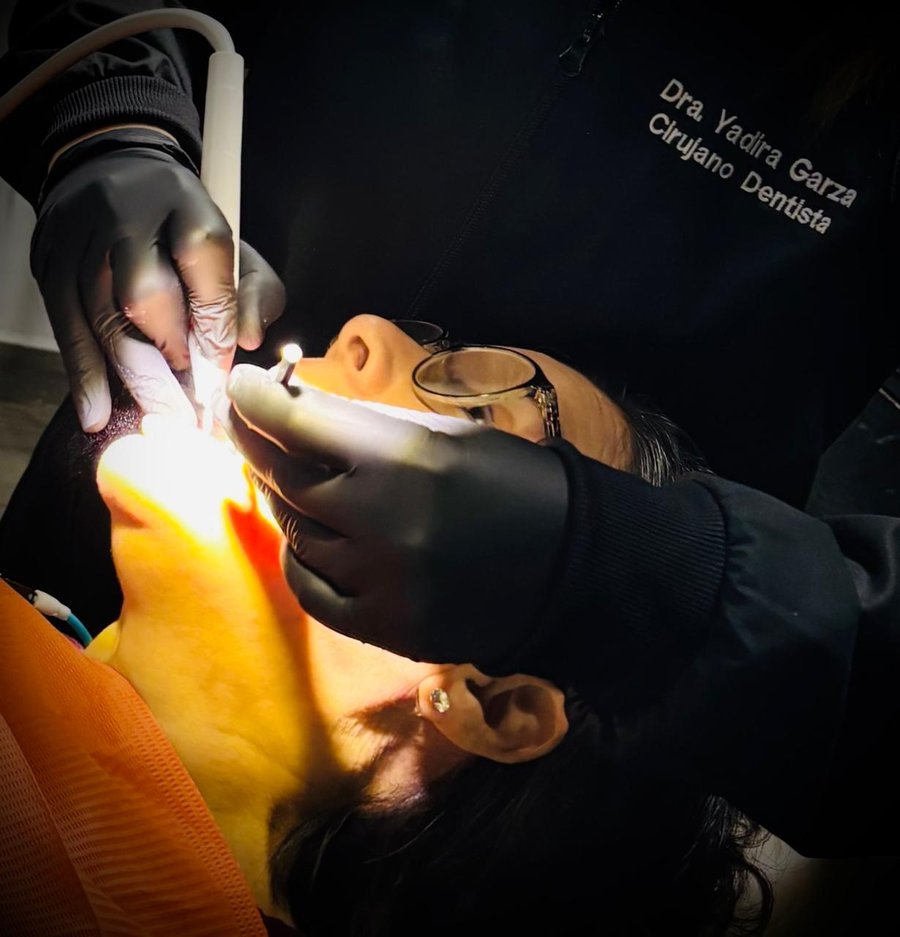
At the Centro Médico Obispado checkup, here is what we do: we ask when it hurts and with what, examine the gumline and the surfaces of your teeth, gently touch each tooth with an instrument to locate the exact spot, and if needed take an X-ray to look between the teeth and under the restorations. With a clear diagnosis, the plan can range from a fluoride varnish and adjusting your routine to treating a cavity or a fracture that looked perfect from the outside.
And something we say often: an early checkup almost always means simpler treatment. A jolt caught in time is usually resolved with a routine adjustment and a few minutes in the chair; the same jolt ignored for a year can turn into a root canal.
Frequently asked questions from our patients
Why does tooth sensitivity happen?
In most cases, from exposed dentin: the enamel wears away or the gum recedes, uncovering a layer crossed by thousands of microtubules that carry the stimulus of cold, sweets, or air to the nerve. Aggressive brushing, bruxism, acid erosion, cavities, and gum recession are the most common causes.
Does desensitizing toothpaste really work?
It can help when the cause is mild or moderate exposed dentin: toothpastes with potassium salts are used twice a day, every day, and the result is assessed after 3 to 4 weeks of consistent use. The scientific evidence on their effectiveness is limited, but their cost and risk are low, which makes them a reasonable first step. If there is no improvement, it is time for a checkup.
How do I know if it is sensitivity or a cavity?
It cannot be confirmed from a distance: only the clinical exam and, if needed, an X-ray can confirm it. As a reference, a brief jolt from cold that fades within seconds suggests exposed dentin; pain that lingers for minutes, throbs without any stimulus, or is concentrated in a single tooth suggests another source and deserves a prompt checkup.
Does teeth whitening leave teeth sensitive forever?
It is common to have temporary sensitivity during whitening and for the following few days, and in the vast majority of cases it goes away on its own. If it persists one or two weeks after finishing, we check it in the office to rule out other causes.
When should a sensitive tooth be a concern?
When the pain persists for minutes after the stimulus, throbs without a stimulus, appears when chewing, is concentrated in a single tooth, or comes with swelling, a bad taste, or fever. With any of these signs, book a checkup within days, not months.
Does tooth sensitivity go away on its own?
The discomfort can ease if you drop the habit causing it — aggressive brushing, for example — and with a desensitizing toothpaste used correctly. But the underlying cause, such as gum recession or wear, does not reverse on its own: it either stabilizes or it needs treatment. That is why it is worth having us evaluate it even if the pain eases.
What toothpaste is good for sensitive teeth?
Look for one labeled for sensitivity, used twice a day without alternating. Give it 3 to 4 weeks. If nothing changes, the problem is something else and it is time for a checkup. And one detail: more foam or more "freshness" does not mean more protection — consistency is what counts.
Does it mean I have a cavity if my teeth hurt with cold?
Not necessarily. The most common cause is exposed dentin, not a cavity. But a cavity can also cause sensitivity, and telling them apart from a distance is impossible: only the clinical exam and, if needed, the X-ray confirm it. If the pain is concentrated in one tooth or lasts longer than normal, do not let it slide.
Does teeth whitening leave teeth sensitive forever?
It is common to have temporary sensitivity during whitening and for the following few days. In the vast majority of cases it goes away on its own. If the sensitivity has not gone away one or two weeks after finishing, that is a different story and it gets checked.
How often should I get checked if I have sensitive teeth?
Every 6 months, the same as the general recommendation. With sensitivity, more frequent visits are worth it: it is a sign that helps detect recession, wear, and cavities early, when they are simple to treat.
Practical summary
- The jolt from something cold almost always means exposed dentin: worn enamel or receded gums leaving the tooth's tubules uncovered.
- Habits matter: a soft brush with the 45-degree technique, daily flossing, and no brushing right after anything acidic.
- Desensitizing toothpaste is a good first step: 3 to 4 weeks of consistent use. If nothing changes, it is time for a checkup.
- Pain that lingers for minutes, throbs without a stimulus, or is concentrated in one tooth is not ordinary sensitivity: book an appointment soon.
- A checkup every 6 months: catching the cause early is the difference between a minor adjustment and a bigger treatment.