
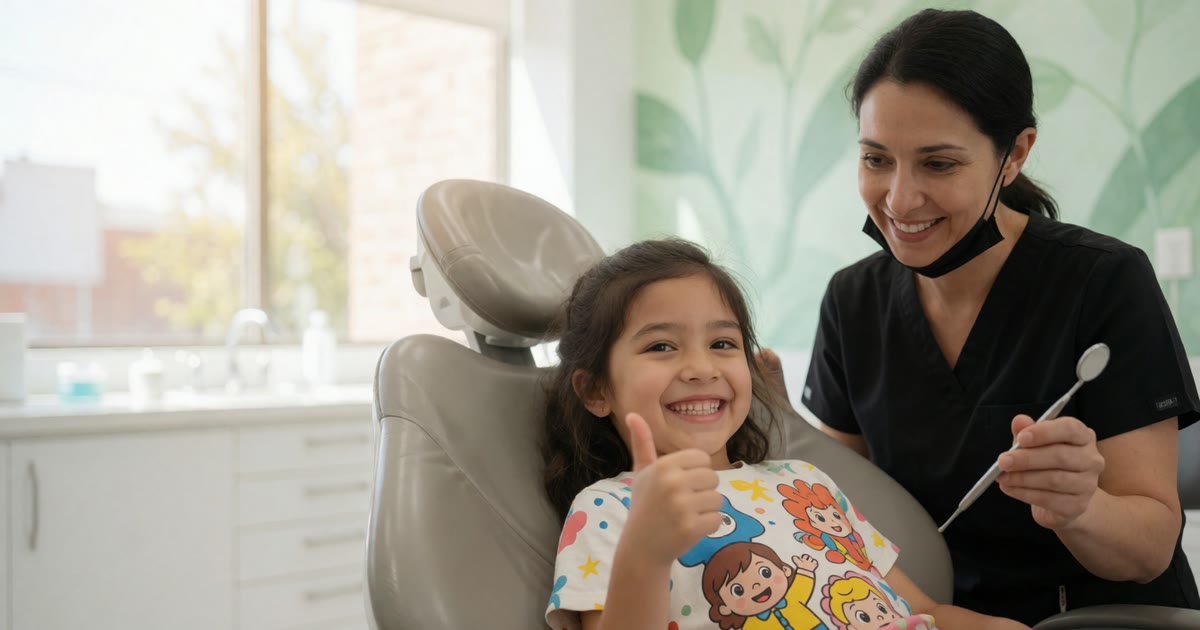
If you have ever announced "we're going to the dentist tomorrow" and watched your child hide behind the couch, you are not doing anything wrong. At our office we see it every week: kids who walk in glued to their mom, clutching a toy — and most of them walk out smiling, showing off the little mirror we lend them. Fear of the dentist in children is not inevitable: to a large extent it is learned — from the environment and from experiences — and what is learned can be prevented.
Here in Monterrey, the first visit can be a calm experience, with no rush and no surprises. I explain why children get scared, how to prepare your child before the appointment, what to expect from the visit, and what works best on the day itself. I write it the same way I talk it through with parents at Centro Médico Obispado: direct and practical.
Why children fear the dentist
For a small child, the dental chair is unknown territory: they are leaned back in a big chair, someone wearing gloves and a mask walks in, instruments that beep and gleam are used, and it all happens in a room where they control nothing. Nervousness is not disobedience: it is the natural response to the unknown.
The fear almost always comes from three sources. First, stories: phrases said at home without thinking — "if you don't behave, the dentist will deal with you" — or parents who narrate their own bad experiences. Second, late appointments made out of pain: when the first visit happens as an emergency, the child associates the office with something bad, and that association takes years to undo. Third, the parents' anticipation: children read our expressions like thermometers; if you are tense, they will be too.
The good news is that the environment can change the script: a pediatric dental office works with gentle lighting, a step-by-step explanation before every movement, and a mascot who breaks the ice. When a child can hold the mirror, have their teeth counted, and ask anything they want, the appointment becomes a guided game.
Quick tip: watch what gets said about the dentist around your child. Phrases like "if you don't behave, the dentist will deal with you" plant the idea that something bad happens there. Talk about the dentist as someone who cares and helps, and never use the visit as a threat: that phrase gets paid for at the next appointment.
How to prepare your child before the appointment
Preparation starts at home, days before the appointment — not that same morning. This is what works best:
- Talk about it matter-of-factly, days ahead. Mention the visit as a normal, positive event: "we're going to meet the dentist who takes care of your teeth." No long speeches — kids can tell when something is being oversold.
- Explain what will happen in honest words. "They'll look at your teeth with a little mirror and maybe give them a wash with a soft brush." And do not say "it won't hurt": you have just introduced pain where none existed.
- Use stories and pretend play. There are children's books about the dentist; playing "dentist" with a spoon and switching roles works too. Practicing opening wide gives them control over the most uncomfortable part.
- Bring a comfort object. Their favorite stuffed animal comes along to the appointment — we welcome them at the office — and it keeps them company.
- Book the appointment at their best time of day. Avoid nap time and the end-of-day slump. A rested child who has had breakfast cooperates far better.
- Arrive early. Rushing to make it on time transmits anxiety; getting there 10 minutes early gives them time to look around the office before sitting down.
One detail almost nobody considers: your own attitude in the waiting room. Do not tell another adult, half under your breath, that "you're nervous about what they're going to do"; kids hear more than you think. Talk about the dentist calmly — your child is reading you.
What to expect at the first dental appointment
The first visit has one simple goal: for the child to get to know the place, the people, and the rhythm of the appointment. It is a guided tour tailored to them: first we show them the chair and it goes up and down once — almost always to laughter — then they lie back "just to look at the ceiling," and there the dentist counts their teeth with a hand mirror. The goal of that visit is not to "fix" anything: it is for the child to come back happy next time.
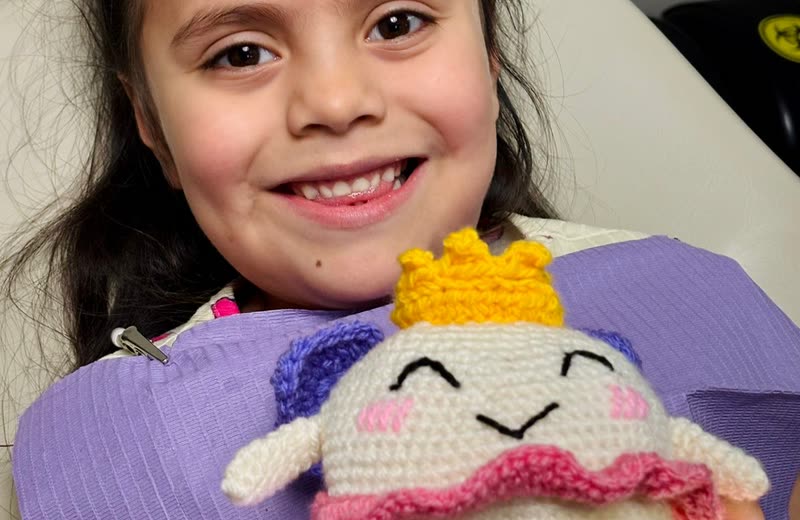
Depending on age and how cooperative the child is, the checkup may include a gentle brushing with fluoride toothpaste, an exam of each tooth with a mirror, a cleaning if the child is ready for one, and X-rays when the mixed dentition calls for them. If the child gets restless, the checkup is shortened and picked up later; nobody will force them to open their mouth.
This is where a trained kids' dentist defuses fear with method, not luck. First comes the environment: soft colors, natural light, the clinic's mascot greeting you at the door. Then the technique dentistry calls "tell–show–do": we say what we are going to do, we show the instrument in their hand, and only then do we do it. The child knows what they will feel before it happens. And finally, reinforcement: every win gets celebrated — a sticker, a small toy, two thumbs up. With every successful visit, the fear comes apart a little more. If your child has already had a bad experience elsewhere, mention it when you book: we adjust the plan so the next visit feels different.
What if they cry? It can happen, and it is normal. If the crying does not settle, we stop and reschedule; forcing a full checkup on a frightened child costs more than one visit. At the appointment we evaluate the mouth and set the plan: that can only be confirmed in a clinical exam.
Quick tip: if your child asks a question you are not sure how to answer ("will it hurt?", "are you going to give me a shot?"), do not improvise. Tell them you will ask the doctor together at the appointment. That way you do not promise what you cannot guarantee, and you teach them that every question is welcome at the office.
What to do — and what to skip — on the day of the visit
On the day of the appointment, the script is simple. What does help:
- A light breakfast before heading out. A hungry child is cranky, and that makes any nerves worse.
- Keep it positive and concrete: "we're going to meet your chair, they'll count your teeth."
- Let the dentist lead the conversation, and allow the play: getting familiar with the environment is part of the treatment.
- Bring them with their comfort object and arrive 10 minutes early, with no rushing.
And what is best to avoid, from experience:
- Do not use the visit as a threat. "If you don't behave, the dentist will deal with you" is a phrase that takes entire appointments to undo.
- Do not promise it will not hurt. Better: "if anything bothers you, tell me and we'll stop."
- Do not bring tension and do not compare them with siblings. "Your sister doesn't cry" only adds pressure.
- Do not bribe them with candy for "behaving." The reward is the experience itself: the sticker, the mirror, the thumbs up.
If your child's fear is very strong or persists over several visits, the plan changes: the appointment is extended, extra supports are used and — only after a professional evaluation — more advanced behavior-management techniques are considered. That decision is made in the office, not over chat.
When to book and how often to return
If your child has never been, book earlier than you think: the first dentist visit for kids is recommended by the first birthday or within six months of the first tooth. With baby teeth already in the mouth, the clock is running: childhood cavities do not wait. After that, checkups every six months keep the routine alive: short visits, monitoring only, fluoride brushing, and prizes.
Do not wait out the six months if you notice warning signs: stains that do not come off with brushing, pain when chewing, bleeding gums, open-mouth breathing, or a thumb-sucking habit. And in Monterrey's dry climate, the mouth dries out faster — one more reason to keep an eye on little ones who breathe through their mouths.
Booking by WhatsApp is the most direct way: send the name, your child's age, and two or three time windows; we confirm the slot that works best — for a first visit, preferably in the morning, when the child is rested. Parents who arrive early to their appointment leave with a better experience than those who come rushing from school.
Quick tip: put the appointment on your phone's calendar the same day you book it, with a reminder two days before and another on the day of the visit. The consistency of checkups every six months is what makes the dentist feel like a routine instead of an event.
Frequently asked questions from our patients
At what age should my child first see the dentist?
The first visit is recommended by the first birthday or within six months of the first tooth coming in. After that, checkups every six months keep the routine going and help catch cavities early.
What should I do if my child is afraid of the dentist?
Prepare at home days in advance: talk about the visit matter-of-factly, read a story about the dentist, play counting teeth with a spoon, and bring their favorite stuffed animal. Never use the visit as a threat or promise it will not hurt; in the office, the step-by-step explanation is what defuses the fear.
What happens at a child's first dental appointment?
It is a get-acquainted visit: the child gets to know the chair, sees a hand mirror, has their teeth counted and, if they cooperate, it can include a gentle fluoride brushing and a mirror check. If they cry or get restless, the visit is shortened and picked up later, without forcing anything.
What phrases should I avoid before the dentist visit?
Avoid using the dentist as a threat ("if you don't behave, the dentist will deal with you"), promising that "it won't hurt," and comparing with siblings. Talk about the dentist as someone who cares and helps, and let the doctor answer pain questions at the appointment.
How long does it take and how often should we return?
A first get-acquainted visit usually wraps up in under 30 minutes. After that, checkups every six months keep the routine alive; if you notice stains, pain when chewing, or habits like thumb sucking, do not wait out the six months and book sooner.
Practical summary
- The first visit by the first birthday or within 6 months of the first tooth, then every 6 months: the earlier it starts, the less fear piles up.
- Never use the dentist as a threat and never promise "it won't hurt": the first plants fear, the second costs you credibility.
- Prepare at home days in advance: talk about it matter-of-factly, read a story, play "dentist," and practice opening wide.
- On the day: a rested, fed child with their comfort object, arriving 10 minutes early.
- The diagnosis and the plan come from the clinical exam: any doubt — stains, pain, habits — is settled in the office, not from a distance.