
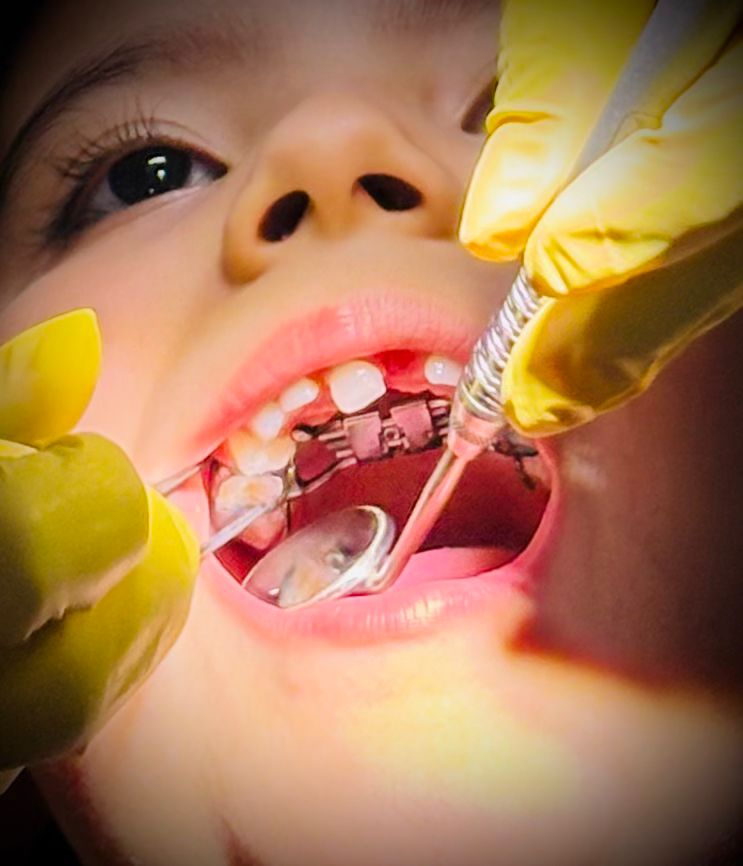
If your child breathes through their mouth, complains that they can't bite properly, or their upper teeth seem small compared to the lower ones, something in the growth of their jaws may not be on the right track. As parents, we often attribute it to a passing phase or a whim, and we let valuable months slip by.
Maxillary orthopedics exists precisely to correct those imbalances while there is still active growth. In Monterrey, we frequently see children who arrive at eight or nine years old with problems that would have been resolved much more easily at six or seven, simply because no one checked their facial development in time. The good news is that early detection makes the difference between a brief interceptive treatment and a more complex intervention later on.
What Maxillary Orthopedics Is and How It Differs From Orthodontics
The most common confusion in the dental office is thinking that maxillary orthopedics and orthodontics are the same thing. They are not, and understanding the difference helps you know why your child needs one and not the other.
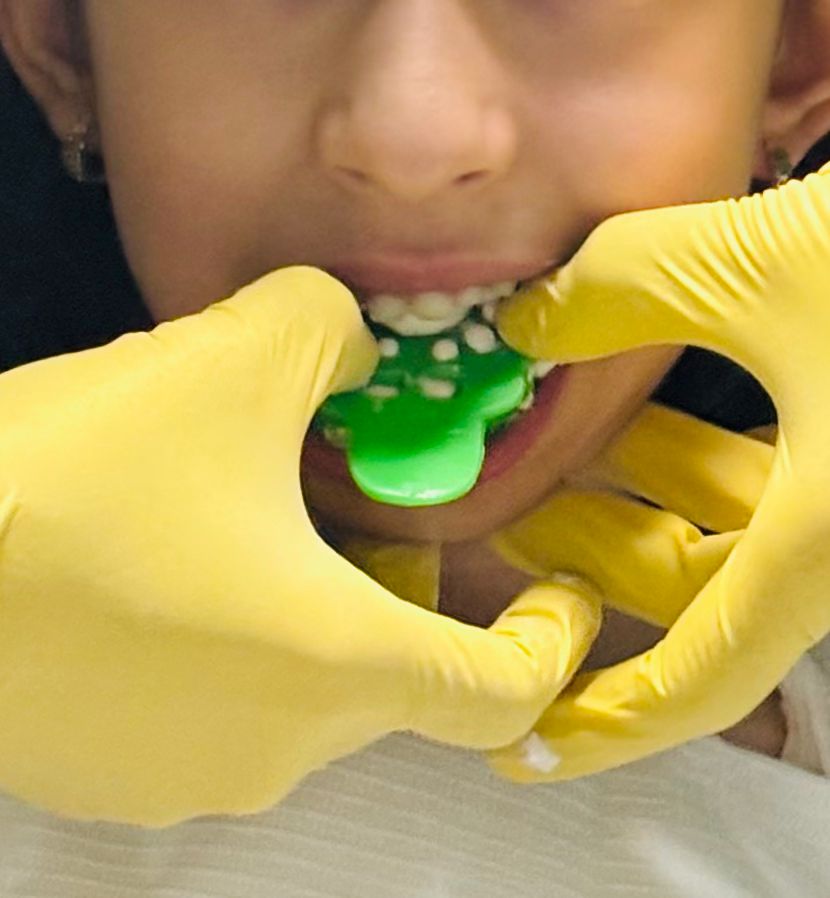
Orthodontics moves teeth. It deals with the individual position of each tooth: whether they are crooked, crowded, or rotated. It is typically performed on teenagers or young adults, once the permanent dentition is present and the jaw bones have finished growing.
Maxillary orthopedics, on the other hand, works on the bones. Its goal is to guide the growth of the upper jaw and the mandible so that they reach the correct size, shape, and position. Think of scaffolding: while the house is being built, the scaffold directs the structure. Once the house is finished, the scaffold is no longer of much use. The same happens with facial bones: there is a window when they can still be molded, and once that window closes, the options become more limited.
Many children need maxillary orthopedics first and orthodontics afterward. This is not unusual: first the bone is aligned, then the teeth. It is a logical sequence and one that is well documented in the specialized literature.
Signs Your Child May Need Maxillary Orthopedics
You don't need to be a specialist to notice certain signs. Some are obvious; others are more subtle. The important thing is not to wait for all of them to appear together before taking action.
The most common signs that justify an evaluation include:
- Constant mouth breathing, especially at night. If your child sleeps with their mouth open, snores, or wakes up tired, it is worth investigating.
- Crossbite: the upper teeth close inside the lower teeth, instead of the other way around.
- A very narrow upper jaw, which causes dental crowding and is sometimes accompanied by a vaulted palate.
- A retruded mandible (appears small or pushed back) or prognathism (it protrudes too far forward).
- Front teeth that cannot touch when closing the mouth, a condition known as open bite.
- Difficulty biting into foods or pronouncing certain sounds clearly.
Important: If you notice your child breathing through their mouth, don't dismiss it as an insignificant habit. Nasal breathing is key to proper facial development. Sustained mouth breathing is associated with changes in tongue position and can influence jaw growth, favoring narrow palates and more elongated facial patterns.
A single sign does not mean there is a structural problem. Three or four do warrant a professional evaluation.
The Growth Window: Why Age Matters
Here is the critical point that many parents are unaware of: maxillary orthopedics works best while the child is still growing. Not before, not after.
The ideal stage is usually between 6 and 10 years of age, during the mixed dentition phase. In that window, the jaws still have active sutures and respond favorably to orthopedic forces. This is the moment to expand a narrow jaw, guide a retruded mandible, or correct a crossbite with relatively little effort.
After puberty, when bone growth slows down and the sutures consolidate, the options shrink. What an orthopedic appliance resolves in months at age 7 may require orthognathic surgery combined with orthodontics at age 14. It is not that the problem has gotten worse: it is that the bone is no longer as moldable.
That is why the American Association of Orthodontists (AAO) and the ADA recommend a first orthodontic evaluation at age 7. It is not about putting an appliance on a young child for no clinical reason: it is about detecting issues in time, planning, and acting when growth allows it.
What the First Evaluation With the Specialist Is Like
The first visit often makes parents anxious, especially when they don't know what to expect. In reality, it is a calm, informative, and completely non-invasive appointment.
The specialist reviews the child's medical history, asks about habits such as thumb sucking, breathing, diet, and sleep. Then a clinical examination of facial growth is performed: the relationship between the upper jaw and the mandible, the bite, the shape of the palate, and the position of the tongue when swallowing. In many cases, complementary studies are requested, such as panoramic or cephalometric X-rays and digital study models.
Sometimes the child is referred to an ENT specialist to rule out adenoid or tonsillar hypertrophy, because if there is structural nasal obstruction, the orthopedic appliance alone will not solve the problem. Maxillary orthopedics works best when approached from a multidisciplinary perspective: the specialist dentist, the ENT, and, depending on the case, a speech therapist or pediatrician.
At the end of the evaluation, parents are told whether there is a real problem, its magnitude, what options exist, and when it is best to intervene. Treatment does not always begin immediately: in some cases, follow-up is scheduled every six months to monitor growth.
Tip from Dra. Yadira: Bring any previous studies your child has to the first appointment: X-rays, pediatric evaluations, ENT reports. The more complete the information the specialist has, the more precise the recommendation will be. And don't be shy about asking questions: it is your child, and you have the right to understand every step.
Types of Appliances Used in Pediatric Maxillary Orthopedics
There is no single appliance for every case. The type of device depends on the problem to be corrected, the child's age, and the stage of growth.
The most common ones are:
- Palatal expander: used to widen a narrow upper jaw. It is the most common appliance in pediatric maxillary orthopedics. It can be fixed (cemented) or removable, depending on the case.
- Schwarz plate: a removable appliance that allows gradual expansion, typically indicated for mild expansions or retention.
- Face mask (protraction): used to advance the upper jaw when it is retruded relative to the mandible. It is combined with an intraoral appliance.
- Activator or functional appliance: removable device that stimulates mandibular growth in cases of a retruded mandible, guiding the position when the mouth closes.
- Quad Helix: a fixed expander with four springs that produces slow, controlled expansion of the upper jaw.
The specialist chooses one or another based on the diagnosis. No appliance works for everything, and switching from one to another without a clinical reason can delay treatment.
What to Expect During Treatment and How Long It Lasts
A recurring question in the office is how long the whole process will take. The honest answer: it depends on the problem, the child's age, and their cooperation.
The active phase of maxillary orthopedics usually lasts between 6 and 18 months. In mild cases, a palatal expansion can be completed in a few months; in more complex cases with several phases, the process takes longer.
During the first few days, the child may feel mild discomfort, especially when biting or when the appliance is being adjusted. It is not intense pain, but a sensation of pressure that gradually subsides. A soft diet during that first week is usually enough to manage it.
The child's cooperation is decisive. If the appliance is removable and the child does not wear it for the prescribed hours, the treatment does not progress. If it is fixed, home care is simpler but still important.
Follow-up appointments are usually monthly or every two weeks, depending on the phase. At each visit, the specialist verifies that the appliance is working, makes the necessary adjustments, and checks hygiene.
Home Care While Your Child Wears the Appliance
The success of the treatment does not depend solely on the specialist: what happens at home matters just as much, if not more. Clean, well-maintained appliances last longer and work better.
Some practical recommendations:
- If the appliance is removable, wash it with a soft brush and warm water every time the child takes it out. Do not use hot water: it can warp the acrylic.
- Prevent the child from eating hard, chewy, or sticky candies while wearing the appliance, especially if it is fixed.
- Reinforce tooth brushing after every meal. An appliance accumulates plaque if it is not cleaned properly.
- Bring the appliance to every follow-up appointment, even if it is removable and the child is not wearing it that day.
- If the appliance becomes loose, breaks, or causes pain that does not subside, come in before the next scheduled appointment. Do not wait until the next check-up.
The routine at home is what sustains the treatment between appointments. Committed parents make the process much more manageable for the child and the specialist.
Practical summary
- Maxillary orthopedics guides the growth of facial bones, while orthodontics moves the teeth. They are distinct stages and sometimes complementary.
- Mouth breathing, crossbite, and a retruded mandible are the most common signs that justify an evaluation.
- The ideal time to intervene is during active growth, usually between 6 and 10 years of age. Once that window passes, the options shrink.
- The type of appliance is determined by the specialist based on the diagnosis; there is no universal solution.
- Home care and the child's cooperation determine a large part of the treatment's success.
CTA: Does your child breathe through their mouth or have a crossbite? Schedule a maxillary orthopedics evaluation via WhatsApp and a specialist will guide you.
Dr. Yadira Garza — Dental Surgeon, UANL. 22 years of clinical experience. Professional license 4520593. Practicing at Especialidades Dentales, Monterrey, Nuevo Leon.
This article is for informational purposes only and does not substitute professional consultation.