
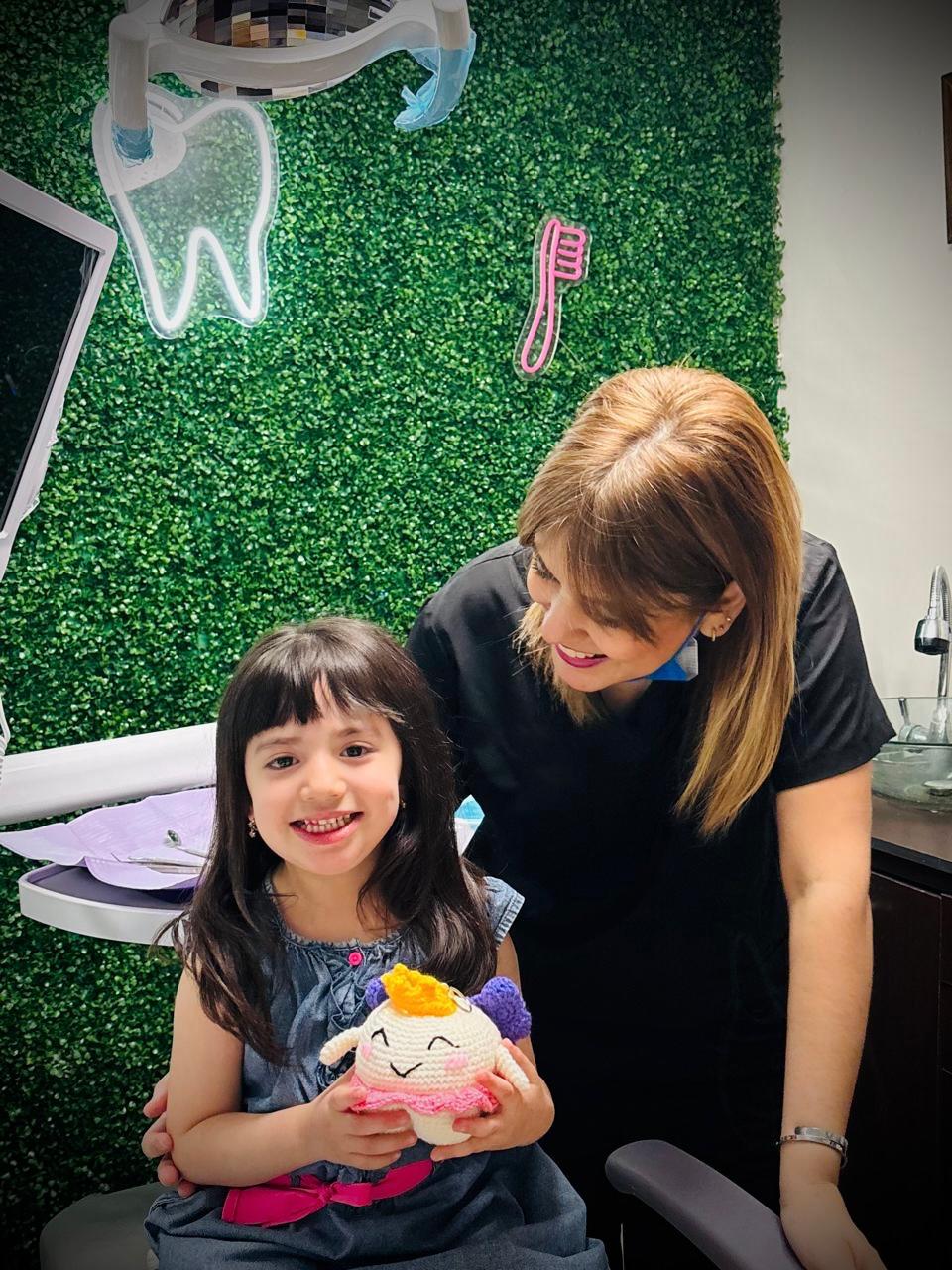
When Should I Take My Child to the Dentist for the First Time?
Tag: Pediatric Dentistry Reading time: 7 min
The first tooth comes in, then the second, and with them comes a question almost every parent in Monterrey asks sooner or later: when is it time to take the child to the dentist? Many wait until there is pain, or until all the baby teeth have come in, and that is when we lose a huge window to prevent problems.
Here in Monterrey, we see offices full of children who arrive with cavities at three or four years old, when a simple early visit could have prevented all of it. Pediatric dentistry is not just about fixing what already hurts; it is about guiding oral development from the very first tooth [1].
What Age Is Recommended for the First Dental Visit?
The standard recommendation from international dental academies and preventive guidelines is clear: the first dental visit should happen within six months of the first tooth erupting, or at the latest by the child's first birthday [1][3]. In clinical practice, we usually say that once the lower front teeth have come in, it is a good time to schedule.
That first appointment is not about invasive treatment. It is

The pediatric dentist does not just check teeth: they evaluate facial development, breathing patterns, possible habits such as thumb sucking or prolonged bottle use, and factors that influence how the permanent teeth will come in later [2]. The earlier we detect these details, the easier it is to redirect growth.
What to Expect During That First Dental Visit
Many parents arrive nervous because they picture a cold office, harsh lights, and a crying child. In reality, the first pediatric dentistry appointment is usually brief and very play-oriented (known as the "Tell-Show-Do" technique). The pediatric dentist gets the child used to the chair, shows them the "magic mirror" and the instruments, and lets them touch whatever is safe.
During that visit we check:
- Tooth eruption and the order in which they are coming in
- Condition of the tissues and gums
- Presence of white spots or early cavities (demineralization) [2]
- Labial and lingual frenula
- How the child chews and how the mouth closes when biting
At the end we talk with parents about brushing technique, the amount of toothpaste according to age, use of floss once there is contact between teeth, and questions about the pacifier or bottle. If something requires treatment, we plan it calmly; aside from acute emergencies (severe pain, infection), no procedures are done at this first visit [1].
How to Prepare Your Child Before the Appointment to Reduce Fear
Dental fear is almost never born in the child: it is learned at home. When children hear phrases like "if you do not behave I will take you to the dentist" or "do not cry, it will not hurt," they are already predisposed to expect something bad. The way adults talk about the dentist builds or destroys trust [2].
To prepare your child without creating anxiety, it helps to talk about the dentist as a normal visit, something we all do to take care of our mouth. No threats, no exaggerated promises of rewards. It also helps to read stories or watch simple videos about dental visits, and play at home at "checking our teeth" with a brush, counting and looking.
On the day of the appointment, it is best to arrive a few minutes early, not hours ahead (that only feeds nervousness in the waiting room), and bring an object that comforts them if they need it. Avoid scheduling the appointment at times when the child is usually tired or hungry. A rested and fed child cooperates much better.
Baby Teeth: Why They Also Matter and How to Care for Them
There is a widespread idea that baby teeth "do not matter because they will fall out." False. Primary teeth have key functions: they hold space for the permanent teeth, allow proper chewing that influences nutrition and facial development, and participate in language development [2].
When a baby tooth is lost early due to decay or trauma, the neighboring teeth tend to shift into that space. When the permanent tooth arrives, there is no longer room and it erupts misaligned. That is why caring for primary teeth is not an aesthetic luxury; it is an investment in future alignment [2].
To care for them at home:
- Brushing twice a day with fluoride toothpaste in an age-appropriate amount [4]
- Use of floss as soon as there is contact between two teeth
- Avoid bottles with milk or juice at bedtime (risk of baby bottle tooth decay) [1][3]
- Limit processed sugars, especially between meals
- Take the child to regular checkups, not only when there is pain
Clinic tip: The amount of toothpaste matters more than the brand. Before age three, a lentil-sized amount is enough; after that, a pea-sized layer [4]. Topical fluoride is safe and effective when the age-recommended dose in preventive guidelines is respected.
Early Signs That Mean You Should Take Your Child Sooner Than Planned
It is not always possible to wait until the birthday or until six months after the first tooth. There are clinical signs that call for an earlier visit:
- White spots on the inner or outer face of the teeth, especially near the gum (early sign of decay)
- Dark spots or brown dots that do not come off with brushing
- Complaints from the child when eating cold, hot, or sweet foods (sensitivity)
- Gums that are red, swollen, or bleed when brushing
- Spontaneous pain or pain that wakes the child at night
- Loss of a primary tooth due to trauma, or a dental fracture
These signs justify scheduling before the planned date. Remember that this can only be confirmed in a clinical exam; what you see at home is an indicator, not a diagnosis [2]. If your child took a hit to the mouth, even with no visible fractured tooth, an evaluation is recommended to rule out root damage or luxation.
Home Habits That Prevent Dental Problems in Childhood
Prevention does not start in the office: it starts at home. The pediatric dentist guides, but daily habits are what make the difference between a child with a healthy mouth and one who enters the cycle of recurring decay [3].
The most effective habits are the simplest. Supervised brushing until the child has the fine motor skills to do it alone, which usually happens around age seven or eight [1][4]. Before that, the child can pass the brush, but the parent should finish the cleaning. A useful technique is "mirror brushing": the parent brushes their own teeth while the child imitates, and then the child's cleaning is completed.
Other measures I recommend in consultation:
- Do not put the child to sleep with a bottle of milk or juice; the sugar sits stagnant all night
- Prefer water as the usual drink, not juices even if they are "natural" [3]
- Introduce a regular cup around age one and phase out the bottle gradually
- Watch for thumb sucking or prolonged pacifier use, which can alter the palate (occlusion)
- Keep checkups every six months according to individual risk, do not wait until there is pain
Advantage of a Dentist at Centro Médico Obispado for Families in Monterrey
Being treated in central Monterrey has practical advantages that many parents do not appreciate until they experience them. Centro Medico Obispado is located near the Periferico (the main ring road), with relatively easy access from Guadalupe, San Pedro, and downtown. For families with school-age children, not having to cross the entire city is a huge help when we talk about recurring appointments.
In the office we see families coming from different points of the metropolitan area, and what they appreciate most is being able to schedule the appointment without sacrificing half a day. Proximity reduces school absenteeism, reduces the stress of the trip, and makes it easier to keep up with the frequency of checkups. And parents can be treated in the same place, which reinforces the family habit of taking care of the mouth.
If your child has passed their first birthday and has not seen a dentist, or if you notice any of the signs mentioned above, do not wait for pain. The first appointment is brief, friendly, and usually more informative than therapeutic. Scheduling on time is what allows your child's mouth to grow without setbacks.
Practical summary
- The first visit is recommended within six months of the first tooth erupting, or by the first birthday at the latest [1]
- Baby teeth matter: they hold space for permanent teeth and allow proper chewing and language development [2]
- Dental fear is learned at home; talk about the dentist as something normal, without threats or exaggerated promises
- Supervised brushing until about age 7-8, age-appropriate fluoride, and sugar control are the foundation of prevention [4]
- White spots, dark spots, or pain when eating cold are signs that justify scheduling before the planned date
CTA: Has your child scheduled their first dental visit yet? Message us on WhatsApp and we will guide you with no commitment.
References
- American Dental Association (ADA) — First Visit to the Dentist. https://www.ada.org/resources/oral-health-topics/first-dental-visit
- Mexican Academy of Pediatric Dentistry / NOM-013-SSA2-2015 — Standards for the prevention and control of oral diseases in the pediatric population (general principles). https://www.gob.mx/salud/nom-013-ssa2-2015
- World Health Organization (WHO) — Oral health: Key facts. https://www.who.int/news-room/fact-sheets/detail/oral-health
- Colgate Professional / Fluoride Guidelines — Recommendations on safe use of fluoride toothpaste in children. https://www.colgateprofessional.com.mx
Legal and Professional Note
This article is for informational purposes only and does not substitute professional consultation. Dr. Yadira Garza — Dental Surgeon, UANL. 22 years of clinical experience. Professional license 4520593. Practicing at Especialidades Dentales, Monterrey, Nuevo León.