
Orthodontics: metal braces, ceramic braces, or clear aligners
Tag: Orthodontics Read: 7 min
If you're reading this, you've probably already looked in the mirror —or checked your phone camera— and thought: "it's time to fix this." Maybe you've been putting it off for years because you didn't know where to start, or because someone told you braces are "for teenagers" and you're well past that stage. Or maybe you've heard about clear aligners and it sounded too good to be true.
Here at the practice we see this every day: patients from Monterrey who want a straight smile but feel lost among so many options. Metal braces, ceramic braces, clear aligners… what's the real difference? And which one is right for you?
Let's break it down, no sugarcoating.
Metal braces: the classic that's still the gold standard
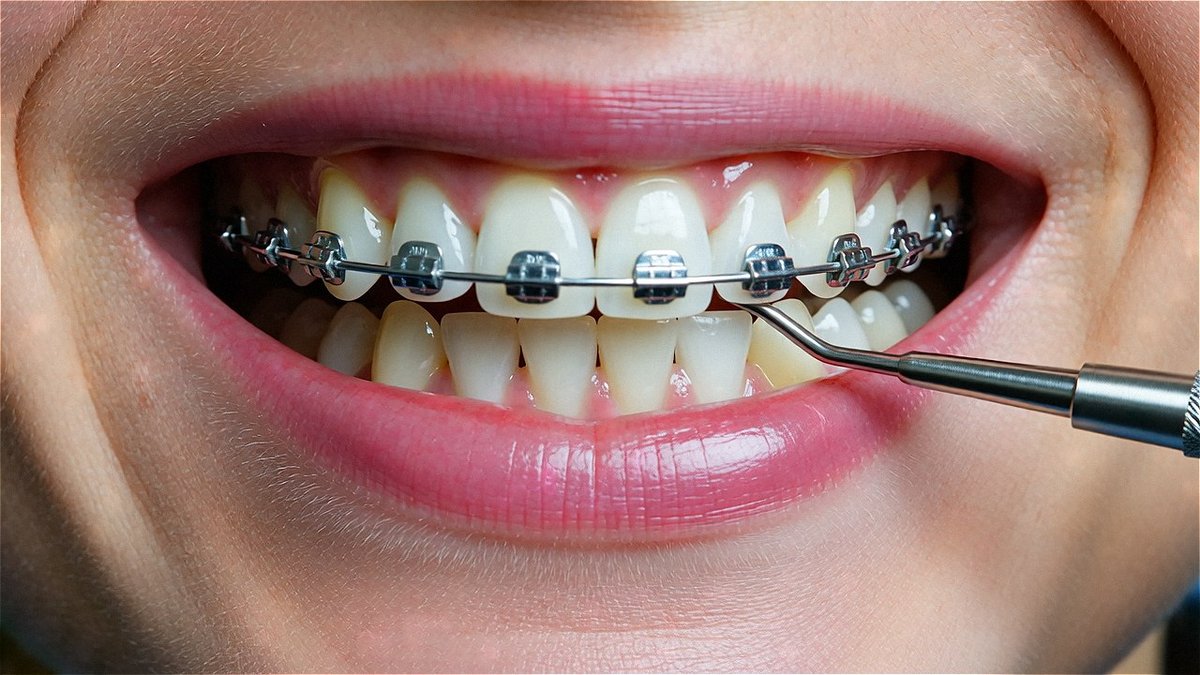
Metal braces are the ones you've probably known forever: those small stainless steel pieces bonded to each tooth and connected by a wire. They work by applying a constant, controlled force to move teeth into their correct position.
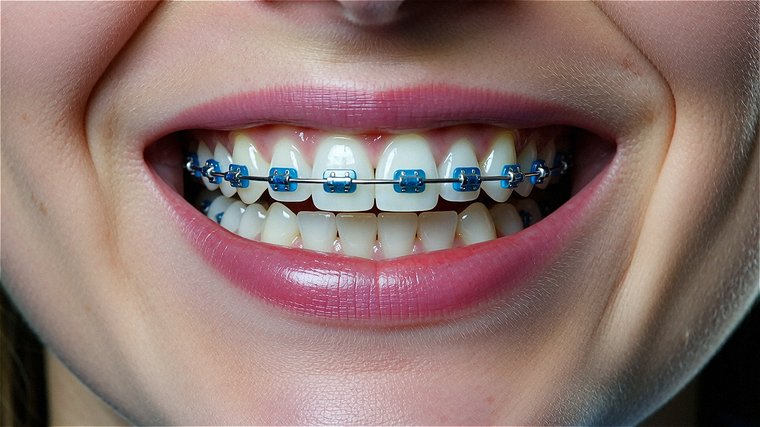
Why are they still so popular when "more modern" options exist? Because they are effective, durable, and versatile. They're the most versatile option in orthodontics and can handle practically any type of case: severe crowding, crossbites, deep bite issues, significant rotations. The orthodontist has fine control over each tooth because the wire-and-ligature system allows for very precise adjustments.
They're also the most resistant to chewing forces. Forgot you have braces and bit into that rib at Sunday's cookout? Metal braces handle the load better than ceramic ones, though that doesn't mean they're indestructible —it's still wise to avoid excessively hard foods—. They don't fracture as easily as ceramic braces, and they don't depend on your discipline to swap aligners every week.
What bothers many people is the aesthetics: they're noticeable, and that can be uncomfortable if you work face-to-face with the public or simply don't want your smile to be "the one with braces." It's also true that the first few weeks can cause irritation to the cheek lining, and hygiene requires more dedication —elastics and ligatures trap food easily.
Our recommendation: If you choose metal braces, ask your orthodontist about self-ligating braces instead of the traditional ones with rubber ligatures. They reduce plaque buildup around the bracket, prevent ligatures from staining, and can cut down on emergency visits for a loose bracket.
Ceramic braces: the middle ground
Ceramic braces work on the same principle as metal ones —controlled force on the tooth via wire and bracket— but they're made from materials that blend with the color of your teeth: ceramic or synthetic sapphire.
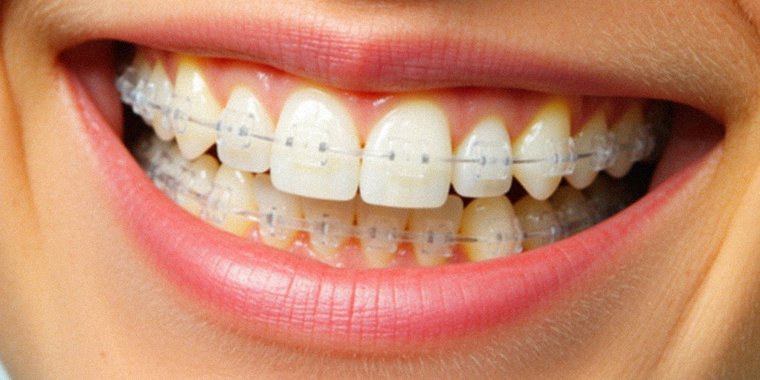
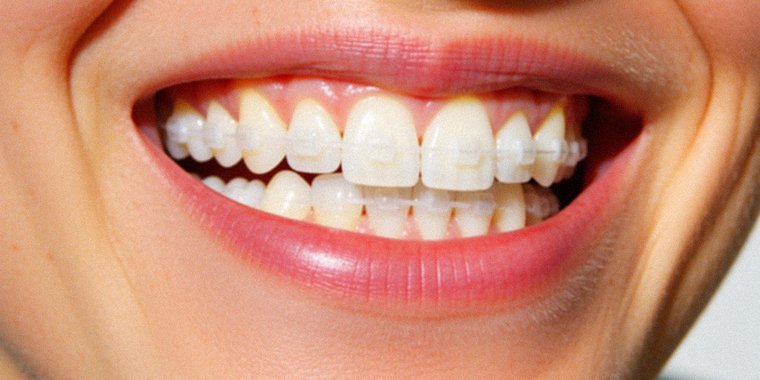
The advantage is obvious: they're far less noticeable. If you're sitting in a meeting at Centro Médico Obispado or giving presentations to clients, ceramic braces give you more visual peace of mind. Sapphire ones are practically transparent and don't stain over time; ceramic ones are stain-resistant themselves, but the elastic ligatures around them can take on a yellowish tint if you drink a lot of coffee, dark tea, or cola.
But there are trade-offs. Ceramic braces are more fragile than metal ones: a hard bite or an impact can fracture them, and replacing a broken piece adds time and cost to your treatment. They also generate more friction with the wire than metal braces, which in some cases can influence treatment duration.
In terms of comfort, the initial sensation is similar to metal braces: soreness the first few days, possible irritation, gradual adaptation. And hygiene requires the same rigor —maybe more, because ceramic brackets are slightly larger.
Who does it make sense for? For patients who need the control of traditional braces but prefer their treatment to go unnoticed. It's not the most affordable or the most durable option, but for many it strikes the right balance between effectiveness and aesthetics.
Clear aligners: freedom with responsibility
Clear aligners (like Invisalign and similar systems) are transparent medical-grade plastic trays that fit over your teeth and are changed every one to two weeks. Each aligner moves your teeth a fraction of a millimeter, and the full sequence takes your smile from where it is to where you want it to be.
What attracts most of our patients is clear:
- You take them out to eat and brush. No food restrictions. You can keep eating your favorite street tacos without worrying.
- They're practically invisible. Unless someone looks very closely, they won't notice.
- Less irritation. No metal in contact with your cheek lining.
- Fewer office visits. You change the aligners yourself at home; appointments are every 6-8 weeks to check progress.
But —and this is a big "but"— aligners require discipline. You must wear them 20 to 22 hours a day. If you take them out "just for this meeting" and then "just for this lunch" and then "just for this coffee," the hours add up, the tooth doesn't move as it should, and the treatment drags on or fails.
There are also clinical limitations. Aligners are effective for mild to moderate crowding, gaps between teeth, small rotations, and some bite issues. But in cases of complex movements —severe molar rotations, significant intrusions, serious open bites— the available evidence indicates that fixed braces remain more predictable.
One point few people mention: aligners stain if you wear them while drinking coffee, red wine, or any pigmented liquid. The rule is simple: only water with aligners in. Everything else, without them.
How to choose? Factors that matter (and myths that don't)
There's information circulating on social media and among acquaintances that simply isn't true. Here we'll focus on what really counts:
The complexity of your case is the number one factor. It's not about what you like best, but about what can solve your problem. An orthodontist evaluates X-rays, models, and your history to determine whether you're a candidate for aligners or need braces.
Your level of commitment. If you know you're the type who loses things, forgets routines, or tends to procrastinate, aligners can become an unnecessary expense. Braces don't depend on your memory.
Your lifestyle. If you play a wind instrument, practice contact sports, or spend many hours in client-facing meetings, each option has distinct advantages and disadvantages.
Estimated treatment time. In general, metal braces tend to be the fastest option for complex cases; aligners can be comparable in efficiency for simple cases; ceramic braces may take longer due to the additional friction.
Hygiene. With braces, you need interproximal brushes, a water flosser, and a lot of patience. With aligners, hygiene is easier —you take them out and brush normally— but you must clean the aligners themselves and not neglect them.
What you should not believe:
- "Aligners are only for mild cases." False: every year the systems improve and cover more types of movements. But they're not for everything.
- "Metal braces hurt more." The initial discomfort is present in all systems; the intensity and duration vary by patient and case, not just by the type of appliance.
- "Treatment is faster with aligners." It depends entirely on the case. There's no universal rule.
And cost, how does that work?
It's the question everyone brings to the office. Without giving exact figures —because they vary by case, duration, and the adjustments needed— here's what you can expect in relative terms:
- Metal braces: typically the most affordable option in modern orthodontics.
- Ceramic braces: represent an intermediate cost; more than metal due to the material and potential repairs.
- Clear aligners: generally the highest investment, though the difference has narrowed over the years.
What I can tell you is this: the most expensive treatment is the one that doesn't work. If you choose aligners for aesthetics but your case requires braces, you'll spend more on corrections and retreatment. And if you choose metal braces but don't take care of them and constantly break something, the extra costs add up.
Orthodontics is a long-term investment. Thinking only about today's price without considering the final result costs you more.
Practical summary
- Metal braces are the most durable, versatile, and fastest option for complex cases; they're more noticeable but hard to break.
- Ceramic braces (ceramic or sapphire) offer the control of traditional braces with lower visibility; they're more fragile and their friction can influence treatment duration.
- Clear aligners offer aesthetic and hygiene freedom, but require discipline (20-22 hours daily) and don't resolve all cases.
- The right choice depends on your clinical case, your commitment, and your lifestyle —not just what looks best in a photo.
- Relative cost goes from metal (most affordable) to aligners (highest investment), but the "most expensive" is always the treatment that doesn't deliver results.
Book your appointment on WhatsApp and tell us what you'd like to change. We'll evaluate your case, explain which options are viable, and help you make the decision that truly works for you —not the one that sounds best at first glance.
Dra. Yadira Garza — Dental Surgeon, UANL. 22 years of clinical experience. Professional license 4520593. Private practice at Especialidades Dentales, Monterrey, Nuevo Leon.
This article is for informational purposes and does not replace a professional consultation.
References
- American Association of Orthodontists — Orthodontic Treatment Options. Accessed 2026-04-04. (URL to be verified manually)
- Keim R.G. et al. — "Ceramic brackets: An update" — Journal of Clinical Orthodontics. Accessed 2026-04-04. (URL to be verified manually)
- Papadopoulos M.A. et al. — "Clear aligners vs fixed appliances: A systematic review" — European Journal of Orthodontics. Accessed 2026-04-04. (URL to be verified manually)
- Align Technology — Invisalign Treatment Process. Accessed 2026-04-04. (URL to be verified manually)
- Colgate Professional — Types of Braces and Orthodontic Care. Accessed 2026-04-04. (URL to be verified manually)