
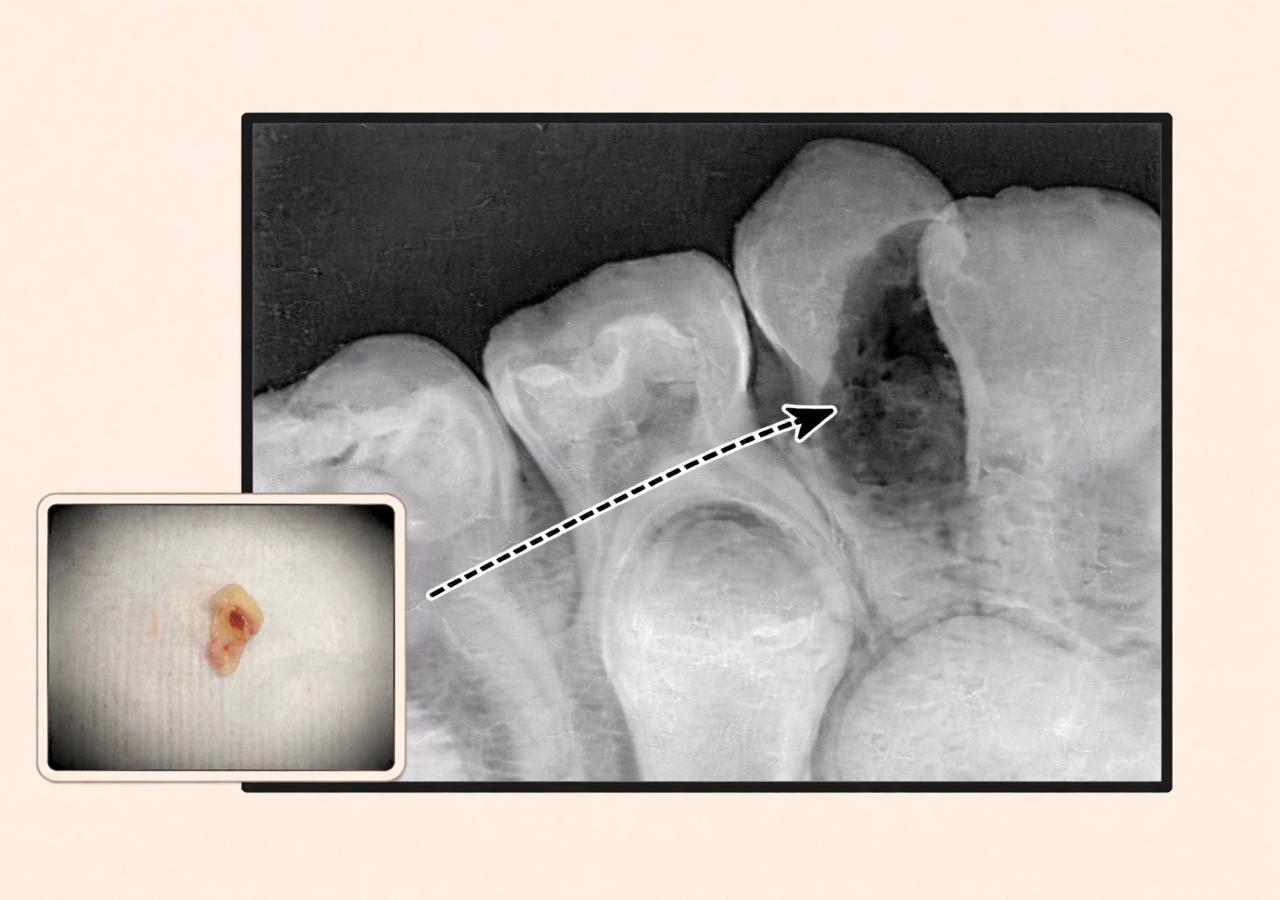
Tooth decay is the most common chronic disease in the world. I'm not exaggerating: according to the World Health Organization, nearly all adults have had at least one cavity in their lifetime. And what surprises me most in my practice, after more than 20 years of practice in Monterrey, is that most of my patients discover they have a cavity when it already hurts — when the damage is far greater and the treatment more complex.
A cavity doesn't appear overnight. It's a slow process that can take months or even years before you feel anything. That's why I want to explain what it actually is, how it forms, which signs you should watch for (even before it hurts), and what you can do to stop it early. What I write here is the same thing I tell every patient who sits in my chair at Centro Médico Obispado.
What exactly is a cavity and how does it form?
A cavity is not simply a "hole in the tooth." It's the result of a chemical process that happens every day in your mouth without you noticing. It all starts with bacterial plaque: an invisible layer of bacteria that clings to your teeth. These bacteria feed on the carbohydrates you eat — sugar, bread, cookies, sodas — and produce acid as a byproduct.
That acid attacks tooth enamel, the outermost and hardest layer of the human body. Although it's resistant, it isn't indestructible. Every time you eat something with sugar, the pH in your mouth drops and the enamel loses minerals (calcium and phosphorus) in a process called demineralization. The good news is that your saliva neutralizes that acid and returns minerals to the enamel (remineralization). The problem comes when you eat sugar so frequently that your saliva doesn't have time to repair the damage.
It's like a daily battle: the bacteria produce acid, your saliva neutralizes it. If there are more attacks than repairs, the enamel starts to give way. First a white spot appears — a sign of demineralization, still reversible. If it isn't stopped there, the acid breaks through the enamel and reaches the dentin, which is much softer. And that's where decay advances fast.
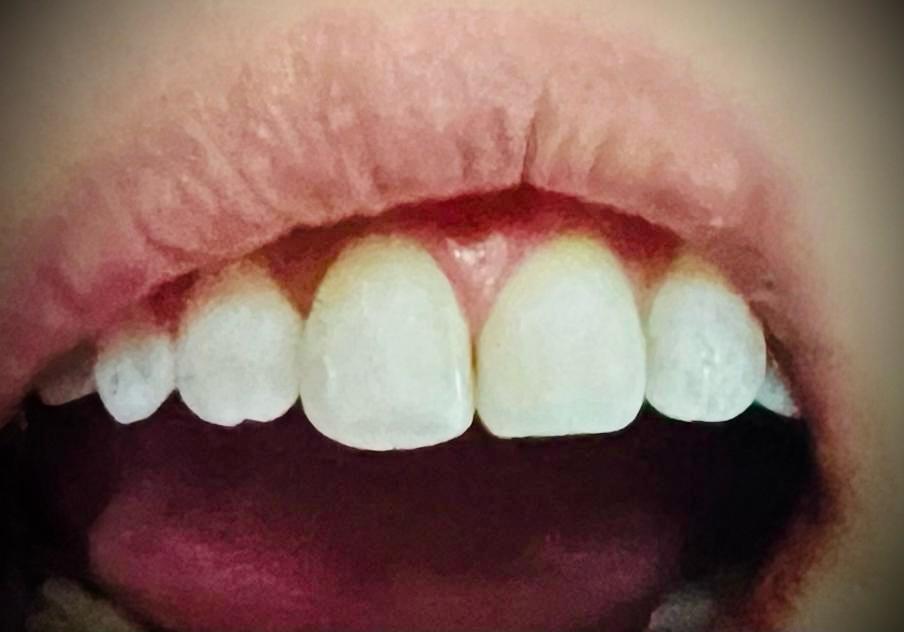
The 4 stages of tooth decay: from enamel to pulp
Understanding the stages of tooth decay helps you see why pain seems to appear "suddenly" when the process has actually been going on for months. Not all cavities progress the same way — it depends on your diet, your hygiene, the quality of your enamel and genetic factors — but the general pattern is this:
Stage 1: White spot (demineralization)
This is the first visible sign. An opaque, white or chalky area appears on the surface of the enamel. At this stage there is no cavity yet and the process is reversible. With topical fluoride, dietary changes and good hygiene, the enamel can remineralize and the spot can disappear. This is the stage I care most about detecting, because it's the only one where we can stop the process without needing to restore the tooth.
Stage 2: Enamel decay
If demineralization continues, the enamel fractures and a cavity forms. At this stage there is usually no pain because enamel has no nerve endings. The tooth looks normal on the outside, but inside there's a tunnel that keeps growing. At this point a filling is needed to seal the hole.
Stage 3: Dentin decay
The acid reaches the dentin, which is porous and sensitive. This is when you start to notice sensitivity to cold, heat and sweets. Decay advances faster in this layer because it's much less dense than enamel. If in the previous stage progression took months, here it can take weeks.
Stage 4: Pulp involvement
The decay reaches the pulp of the tooth, where the nerve and blood vessels are. At this point there's spontaneous pain, pain that wakes you up at night, prolonged sensitivity. The treatment at this stage is not a filling: it's a root canal and, sometimes, extraction of the tooth.
What I want you to remember: tooth decay doesn't hurt until stage 3 or 4. By the time pain appears, the damage is already significant. That's why early detection — with X-rays and regular checkups — is the difference between a simple filling and an expensive root canal.
Symptoms and signs that you might have a cavity (even before it hurts)
The problem with tooth decay is that in its early stages it produces no obvious symptoms. But there are subtle signs that, if you know them, can get you to the dentist before the damage becomes greater:
- Sensitivity to cold, heat or sweets that goes away when you remove the stimulus. If the pain lingers, the decay is already close to the pulp.
- White, brown or black spots on the surface of your teeth, especially between the teeth or in the grooves of the molars.
- Persistent bad breath or an unpleasant taste that doesn't go away with brushing. The bacteria that cause decay also produce sulfur compounds.
- Food that keeps getting stuck between the same teeth. That may indicate a gap created by interproximal decay.
- Roughness when you run your tongue over a tooth that used to be smooth. Demineralized enamel feels rough.
- A color change in a single tooth that turns darker or yellowish. It may indicate that the pulp is affected.
None of these signs on its own confirms a cavity — only a dentist with an explorer and an X-ray can do that. But if you notice any of them, don't wait until it hurts to come in.
Why dental X-rays are key to detecting hidden cavities
There's a type of cavity that your dentist can't see with the naked eye: interproximal decay, which forms between two teeth. Even examining your mouth with a mirror and an explorer, the surface between the teeth is practically invisible. That's why X-rays are indispensable.
On an X-ray, decay shows up as a dark area where the enamel has lost density. It's like seeing the tooth's skeleton from the inside: what looks solid on the outside can have a shadow that indicates demineralization. Periapical and panoramic X-rays allow us to detect cavities while they're still in the enamel — months or years before they become a painful problem.
At our Centro Médico Obispado office, we take X-rays as part of the routine checkup, not only when there's pain. And the amount of decay we detect preventively, in patients who felt absolutely nothing, is considerable. Patients from Guadalupe, San Pedro, Apodaca and the entire metro area arrive convinced that their mouth is perfect — and the X-ray tells a different story.
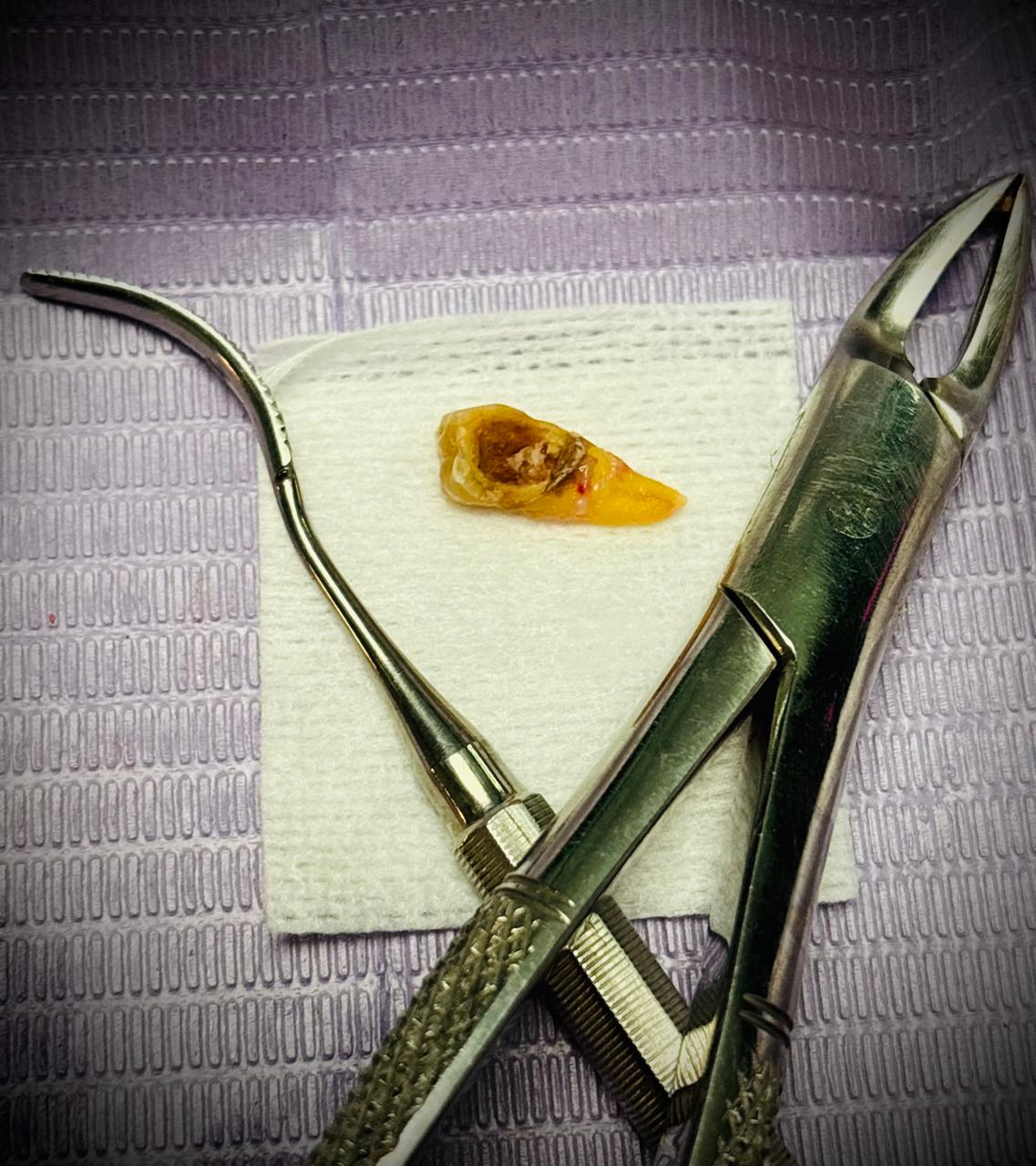
How to prevent cavities: beyond brushing (diet, fluoride, sealants)
The first step is brushing, but it isn't enough on its own. Real cavity prevention rests on four pillars that work together:
1. Mechanical hygiene: brushing and flossing
Brush twice a day with fluoride toothpaste (at least 1000 ppm). Use dental floss or interdental brushes every day — the brush doesn't reach between the teeth, and that's exactly where the most dangerous cavities develop. It's not optional. It's the difference between a healthy mouth and a mouth with cavities between the teeth that you won't see until they hurt.
2. Diet: frequency matters more than quantity
This is the hardest thing for me to explain to my patients. It's not about how much sugar you eat, but how often you eat it. If you drink a soda in 5 minutes, your saliva has hours to recover. If you sip it throughout the afternoon, your mouth stays at an acidic pH constantly and there's never any remineralization. The same goes for snacks: it's better to eat everything at once than to snack on sweets every half hour.
3. Fluoride: enamel's best ally
Fluoride is incorporated into the structure of the enamel and makes it more resistant to acid. It also helps remineralize early white spots. Fluoride toothpaste is the foundation, but in patients at high risk of cavities we can apply high-concentration professional fluoride varnishes in the office. It's a two-minute procedure that makes a real difference.
4. Sealants: a physical barrier on the molars
The deep grooves of the molars are the most common place for cavities, because they're impossible to clean completely with a brush. Pit and fissure sealants are a layer of flowable resin that fills those grooves, creating a smooth surface you can actually brush. They're especially useful in children and teenagers, but adults with deep molars can benefit from them too.
Did you know? Professional ultrasonic cleaning removes tartar that brushing can't. Tartar is calcified plaque, and the bacteria that form it are the same ones that cause decay. A cleaning every 6 months drastically reduces your risk. At our office we do offer professional ultrasonic cleaning — it's a fundamental part of preventive care.
Cavities in children: specific prevention and care
Children are especially vulnerable to tooth decay for several reasons: their enamel is thinner, their molars have deeper grooves, and their diet usually includes more sugar. Early childhood tooth decay — caused by prolonged exposure to sugary liquids, such as putting a baby to bed with a bottle of milk or juice — is one of the most common and most destructive.
Prevention in children starts before the first tooth. Wipe the baby's gums with a damp gauze after every feeding. Brush as soon as the first tooth appears, with a rice-grain-sized amount of toothpaste. Take your child to their first dental visit before their first birthday or when the first tooth comes in — whichever comes first.
Sealants on primary and permanent molars are the most effective tool for preventing cavities in children. And diet control: not prohibitive, but structural. Defined meal times, water as the main drink, and limiting sweets to specific moments instead of free access all day long.
In my experience with pediatric patients in Monterrey, children who come every 6 months from an early age develop almost no cavities. Those who show up at age 5 or 6 having never seen a dentist usually have several. The difference isn't genetic: it's habit.
Available treatments: from a filling to a root canal
Depending on the stage at which the cavity is detected, the treatment varies. These are the options, from simplest to most complex:
- Remineralization with fluoride: For white spots without a cavity. We apply professional fluoride and give dietary and hygiene guidelines. The enamel repairs itself. Nothing is drilled.
- Dental filling (composite): For cavities that have already formed a hole but haven't reached the pulp. The damaged tissue is removed and the tooth is filled with composite in the color of the tooth. It's a single-visit procedure, with local anesthesia, and lasts for years if well cared for.
- Root canal (endodontic treatment): For cavities that reached the pulp. The nerve is cleaned out, the canal disinfected and sealed. Afterwards a crown is placed to protect the tooth. It saves the tooth, but it's a multi-appointment process.
- Extraction: When the tooth is so destroyed there's no structure worth saving. After the extraction, replacement with a dental implant or a bridge is evaluated, to keep the neighboring teeth from shifting.
The cost — financial, in time and in stress — increases exponentially at each stage. An early filling is simple and affordable. A root canal is more complex and more expensive. An extraction with an implant is the most invasive and costly of all. That's why we insist so much on early detection: it's not a fear-based sales pitch, it's simply clinical reality.
Frequently asked questions from our patients
Does a cavity hurt from the start?
No. A cavity in its early stage and in the enamel doesn't hurt, because enamel has no nerve endings. Pain appears when the decay reaches the dentin (sensitivity) or the pulp (sharp pain). In other words, when the damage is already significant.
Can you see a cavity on an X-ray?
Yes. X-rays make it possible to detect interproximal cavities — between teeth — that aren't visible to the naked eye. A panoramic or periapical X-ray shows the areas where the enamel has lost density due to demineralization, sometimes years before you feel pain.
How often should I go to the dentist to prevent cavities?
The general recommendation is every 6 months for healthy people. People at high risk of cavities — a history of multiple cavities, orthodontics, dry mouth from medication — may need checkups every 3 or 4 months. A professional ultrasonic cleaning removes tartar that brushing can't.
Do dental sealants prevent cavities in children?
Yes. Sealants cover the deep grooves of the molars, which are the areas where cavities most frequently develop in children. It's a simple, painless and highly effective procedure. We recommend placing them as soon as the permanent molar erupts.
Practical summary
- Tooth decay is a slow process that doesn't hurt until advanced stages — pain is a sign of significant damage, not of the beginning.
- Early detection with X-rays makes it possible to find cavities between teeth that can't be seen with the naked eye.
- Prevention rests on four pillars: hygiene (brushing + flossing), diet (frequency over quantity), fluoride and sealants.
- Professional ultrasonic cleaning every 6 months is part of preventive care — it removes tartar that brushing can't.
- The cost of treating a cavity grows exponentially: an early filling is far more affordable than a root canal or an extraction with an implant.