
It's eleven at night and a molar has woken up with a heartbeat of its own. You don't know whether to wait until tomorrow, take something from the medicine cabinet, or message the office. This article exists for that night: what to do in the first minutes of a dental emergency, and how to recognize the kind of case where every minute counts.
Here in Monterrey we see these emergencies all the time at Centro Médico Obispado: a hit taken during Sunday's game, a mom who finds her child's tooth lying in the yard, pain that no longer gives any grace period. The good news: almost every dental emergency turns out better if you act fast and in the right order. Here's what to do and when to come in for a visit.
What counts as a dental emergency? Warning signs that mean today
At the office, a dental emergency is any problem in the mouth that needs care quickly: keeping a tooth from being lost, stopping an infection in its tracks, or bringing intense pain under control. The American Dental Association (ADA) separates full-blown emergencies from urgent dental care; for you, the question comes down to one thing: what happens if you wait until Monday?
These situations should not wait out even a single weekend:
- A permanent tooth knocked completely out of its socket after a hit — every minute it spends out of place counts.
- Intense pain that doesn't ease up as the hours go by.
- Swelling of the cheek or of the floor of the mouth, with or without fever; if it's hard to swallow or to open your mouth, that's a hospital emergency room.
- Fever alongside the pain, a bitter taste, or pus: an established abscess.
- Bleeding in the mouth that won't stop when you bite down on a clean gauze pad.
- A loose or displaced adult tooth after trauma, even when it doesn't hurt.
A small painless chip, a tooth with flattened enamel, or fleeting sensitivity isn't always an emergency. It becomes one when pain, inflammation, or bleeding shows up; and that line gets crossed without warning: send us a WhatsApp message and together we'll decide whether this goes today or this week.
And in the middle of the night? Monterrey's hospitals handle emergencies around the clock, with dentistry departments on call. If you wake up with a swollen face, fever, or trouble breathing, go to the hospital: your life comes before the tooth.
Tip from Dra. Yadira: the mouth gets measured with light, a mirror, and trained fingers, not with the internet. If doubt is circling you, send us a WhatsApp message with a photo: we'll tell you whether it goes today or in a few days.
Severe toothache: what to do — and what not to — while your appointment is on the way
Pain almost never arrives with its cause in plain sight: deep decay that has reached the nerve, an abscess at the root, a fracture hiding under an old filling, or a wisdom tooth pushing through. While your appointment is on the way, this helps:
- Rinse with lukewarm water after eating to clear out any food debris. Neither icy nor scalding: on an inflamed pulp, both extremes hurt more.
- Floss the area, gently. A small piece of food stuck in place can hold the pain up all by itself; at the office, what looked like a dying molar sometimes turns out to have been exactly that.
- Cold on the cheek, on the face, in stretches of a few minutes with a towel in between: it takes the edge off the throbbing.
- Take an over-the-counter pain reliever you already know, at the dose on the package. We don't prescribe over chat; and pain that demands a bigger dose every day is a case for the dental chair, not for the pharmacy.
- Chew on the other side and sleep with your head somewhat raised: lying completely flat, the pulsing feels twice as strong.
- Book the earliest opening even if the pain dies down in the afternoon: the quiet almost always returns at night.
And this — never:
- Direct heat on the cheek. A warm compress speeds up swelling that is already developing; on the face during a dental emergency, cold is what goes on.
- Aspirin against the gum or on the tooth. It burns the tissue, and the pain stays.
- Loose antibiotics or borrowed ones. Without a diagnosis they don't cure anything: they only breed resistant bacteria.
- Straight alcohol in the mouth. It numbs things for a few minutes, then it hurts just as much or worse.
- Toothpicks, pins, or needles to "get whatever is in there": an open gum and an infection to go.
Important: if the swelling keeps growing, if it's hard to open your mouth or swallow, or a fever shows up, this is no longer a dental bother: it's an infection advancing into deep spaces. Get seen immediately — at the office if we answer, at the hospital if we don't.
A knocked-out tooth: the minutes that decide whether it can be saved
Here the clock rules. A permanent tooth that has been knocked out — fully out of the bone — is the one emergency whose outcome depends on what you do right at the scene of the accident: the guides from the American Association of Endodontists (AAE) and the International Association of Dental Traumatology (IADT) point out that reimplanting it on the spot is the best treatment, and that the cells of the ligament lose their viability in the dry.
The steps, exactly the way we say them over the phone:
- Find the tooth and pick it up by the crown — the part that does the chewing. Never the root, whether with your finger or a cloth.
- Rinse it with clean water for a few seconds if it has dirt on it; never scrub it and never wrap it in a dry handkerchief.
- Place it back into its socket (the alveolus) if you can, facing the way it used to, and hold it in place by biting on a clean gauze pad.
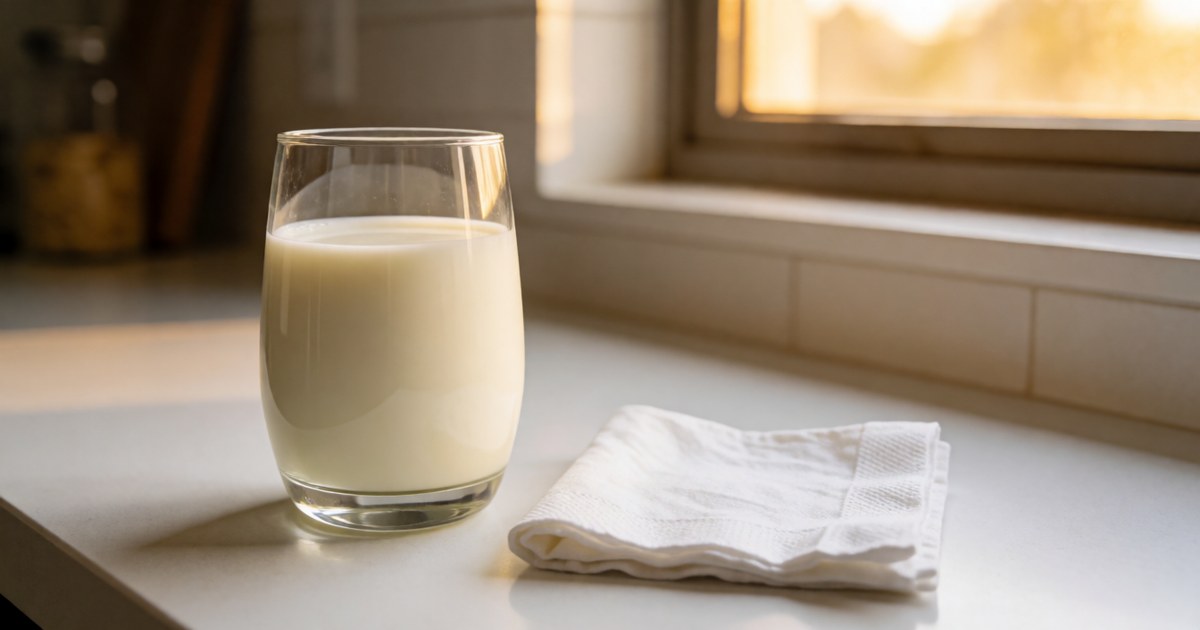
- If not, don't let it dry out: in cold milk — whole milk preferably — or inside your mouth, against the cheek. Plain water and a handkerchief are both poor transports; the special saline solution for it is ideal, but nobody has it at midnight.
- With small children, milk wins: they might swallow the tooth. And let's be clear about it: a baby tooth is not replanted — its permanent successor is still forming underneath.
- Over the socket, bite on a clean gauze pad for 10 to 15 minutes until the bleeding lets up.
- Get to the office immediately even if the tooth is back in place: you'll be asked for a follow-up visit, a splint, and quite possibly root canal treatment.
What if hours have already gone by? With the tooth kept moist, the window is still open; dry, the odds drop a great deal — though reimplanting is still worthwhile and that gets decided at the visit. Minute one beats every trick there is.
Office tip: cold whole milk from the fridge is the "transport" everyone has on hand. Tell your family that a tooth knocked out by a hit goes in milk, held by the crown; in a real emergency, the person who gets things done isn't always the one who got hurt.
A broken or injured tooth: immediate first steps
After a hard hit to the mouth — a ball, a fall, the edge of the pool — the first hour is valuable even when the tooth stays in place. Do this:
- Rinse with lukewarm water and look with good light at what broke and where. A large piece of the tooth gets stored in milk: it can help with rebuilding the tooth later.
- Apply cold to the cheek to keep the swelling down.
- Cover the chipped edge with dental wax — the kind used for braces works — if it's cutting your lip or tongue.
- A loose or displaced tooth: don't bite on it and don't try to straighten it with a finger; it gets stabilized that same day.
- See the dentist even when it doesn't hurt: deep fractures hurt weeks later, once the crack has reached the nerve.
One point that takes effort to accept: a broken tooth without pain is not a tooth without a problem. The crack can be hairline, sit hidden under the gum, or reach only as far as the root — you won't see it in a mirror: it gets confirmed through an exam and an X-ray.
What to expect at an emergency visit in Centro Médico Obispado
If it's your first time, here's what an emergency visit looks like. Pain comes first: local anesthetic, and if the pulp is inflamed, the tooth gets decompressed — opening the chamber, removing the tissue that hurts, and sealing it with temporary material — so you're comfortable that same afternoon. With the pain gone, the strong decisions get made calmly.
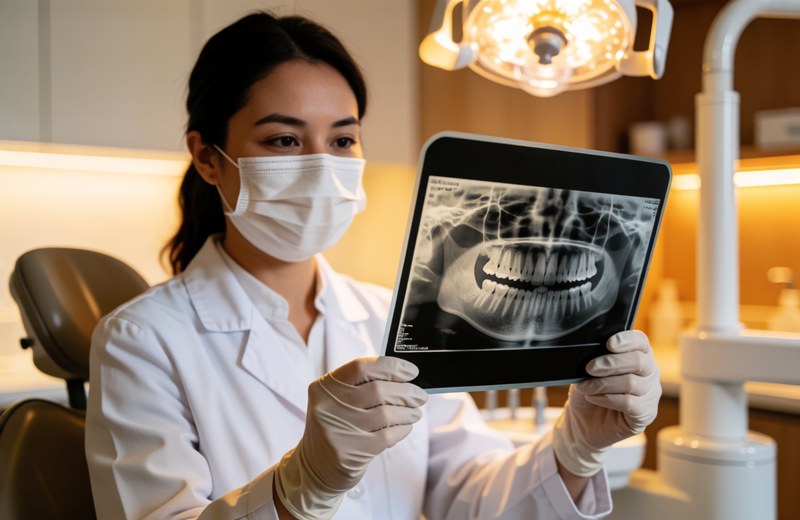
Next comes the technical part: X-rays, percussion — tapping the tooth —, gum probing, and cold vitality tests. With that, the plan is clear:
- An abscess with a dead pulp: root canal treatment the same day, or extraction if there's no saving it, plus drainage if anything has pooled.
- A fracture with a living pulp: a resin restoration — or a crown if enough structure is missing — and follow-up on the tooth's vitality.
- A displaced or loose tooth: repositioned and splinted, with follow-up a few days later.
- A knocked-out tooth that was reimplanted: splint and follow-up visits to decide on the root canal.
- A baby tooth that took a hit: care matched to the tooth, plus a look at the permanent one still forming underneath.
On money, my usual note: you're charged according to the diagnosis — without an exam we don't quote figures over chat, because that would be making them up. What's certain: the earlier you come in, the smaller the treatment. There's a wide gap between a sealant and a root canal; a wider one still between a saved tooth and an implant. The advice: daily flossing, a professional cleaning every six months, a mouthguard if you play sports or grind at night — and come in early. Prevention always costs less than rebuilding.
Frequently asked questions from our patients
What should I do if a tooth falls out completely after a hit to the mouth?
Hold it by the crown — the part that does the chewing — without touching the root, rinse it for a few seconds only if it has dirt on it, and place it back into its socket if you can. If not, keep it in whole milk or inside your mouth, and get to the dentist immediately: the less time the tooth spends out of the mouth, the better the outlook. Baby teeth are not replanted.
If a tooth breaks, should you see the dentist even when it doesn't hurt?
Yes, always. Deep fractures don't hurt on day one: they hurt days or weeks later, once the crack reaches the nerve. The dentist assesses how far it goes and determines whether a restoration is enough, whether the tooth should be capped, or whether root canal treatment is needed. An edge that cuts the lip or tongue gets smoothed in that same visit.
The tooth shifted after a hit but doesn't hurt: is it an emergency?
Yes, it is. A displaced or loose tooth can have its support structure compromised even when it barely hurts or doesn't hurt at all, and early splinting makes a real difference in the outcome. It requires a same-day examination with an X-ray; the real extent of the damage isn't visible to the naked eye.
What if the toothache goes away on its own?
Take it as a warning, not as permission to forget about it. The pain fades when the inflammation subsides or the nerve stops responding, but the cause remains: deep decay, a fracture, or an abscess that can flare back up in the middle of the night. Book a review in the days ahead; with swelling, fever, or nighttime pain, that day is already an emergency.
How do I know whether my case is an emergency or can wait?
The fastest channel your dental office offers: at Especialidades Dentales it's WhatsApp. Send a photo in good light and say how long it's been going on; we'll tell you whether it should be seen today or can wait a few days. With swelling that keeps growing, fever, or trouble swallowing or breathing, go to the hospital emergency room.
Practical summary
- Pain that won't let up, a swollen cheek, bleeding that won't stop, or a permanent tooth knocked out of its socket: today, not next week.
- With a knocked-out tooth, speed is everything: by the crown, into the socket or into milk, and hurry to the office — baby teeth are not replanted.
- With a broken or injured tooth, cold on the outside and never heat on the cheek, wax on the edges that cut, and go get looked at even when nothing hurts.
- Loose antibiotics and home remedies don't cure a dental emergency; swelling that keeps growing, fever, or trouble swallowing all go to the hospital emergency room.
- The emergency visit takes the pain away first and defines the plan after: coming in early is the simplest, least invasive option.
Above all: an emergency doesn't get judged over the internet. When in doubt, write to us — we'd far rather have a case turn out to be small than see a tooth arrive too late.